
Checking Criminal History in Hood County
No single office holds a complete Hood County criminal record. Start by deciding whether the event was a felony, a Class A or B misdemeanor, a fine-only matter, an arrest, or a period of custody. The 355th Judicial District Court and District Clerk are the main route for felony files. The County Court at Law and County Clerk handle Class A and B misdemeanors. Municipal and justice courts keep their own limited-jurisdiction cases. Hood County Sheriff and Hood County Jail create separate incident, arrest, booking, bond, and release records.
Names alone can produce uncertain matches. Before searching Hood County records, gather the full legal name, middle name, date of birth when the public field permits it, likely filing year, charge level, and any cause, incident, or booking number. Spelling variants matter. A court cause number does not replace a police incident number, and neither one is the same as a jail booking number.
- Identify the agency, jail, or court that created the Hood County record.
- Search the correct clerk portal by cause number or name and filing range.
- Read each charge and disposition, not just the case header.
- Request the arrest report or booking sheet from its separate custodian.
- Order a certified judgment or fingerprint review when proof or identity certainty matters.
Note: A new Hood County booking can appear before the prosecutor files a court case or DPS receives the final outcome.
Hood County Records Split by Court
The most common Hood County search mistake is treating the District Clerk portal as a countywide court index. Hood Odyssey Public Access is tied to District Clerk judicial records, chiefly the felony side. The Office of Court Administration identifies NetData as the County Clerk system for County Court at Law matters. A blank Odyssey result does not prove there is no Hood County misdemeanor, municipal, justice-court, or archived record.
This split also changes where certified copies come from. Ask the District Clerk for a felony indictment, docket, judgment, or sentence. Ask the County Clerk about a Class A or B misdemeanor file. Fine-only citations and court-issued failure-to-appear process may remain with Granbury Municipal Court or the correct justice court. Police reports still stay with the arresting agency.
| Hood County channel | Best use | Key identifier |
|---|---|---|
| District Clerk | 355th District Court felony case | Cause number |
| County Clerk | Class A or B misdemeanor | Cause number and filing year |
| Municipal or justice court | Fine-only case or court warrant | Citation or court number |
| Sheriff or police | Incident and arrest report | Incident number |
| Hood County Jail | Booking, bond, release, custody | Booking number |
Texas Official Background Checks
The Texas Department of Public Safety Crime Records Division keeps the Computerized Criminal History repository. Its public Criminal History Conviction Name Search shows reported Texas convictions and deferred adjudications. It is broader than Hood County, yet narrower than a full authorized fingerprint history. A public name result can match the wrong person, omit an unreported outcome, or fail to show a local arrest that never became a public conviction entry.
For review of one’s own Texas history, DPS directs fingerprints through Fingerprint Applicant Services of Texas, known as FAST, and IdentoGO by IDEMIA. Fingerprints link the request to identity and make this the sound starting point for a correction. An FBI Identity History Summary is a separate federal, subject-only fingerprint product, and its electronic request begins at the FBI EDO portal. Neither replaces Hood County certified court records.
| Official product | Published fee | Scope |
|---|---|---|
| DPS online name search | $1 credit plus card surcharge | Reported public Texas convictions and deferred adjudications |
| DPS offline name check | $10 | Name-based DPS product |
| Texas personal fingerprint review | $15 DPS plus $10 FAST | Identity-based Texas self-review |
| FBI Identity History Summary | $18 | Fingerprint-linked federal identity history |
Hood County Searches Through DPS
The DPS public conviction search is the state layer of a Hood County check. The official interface shows why an account and prepaid credits are needed before a name query.
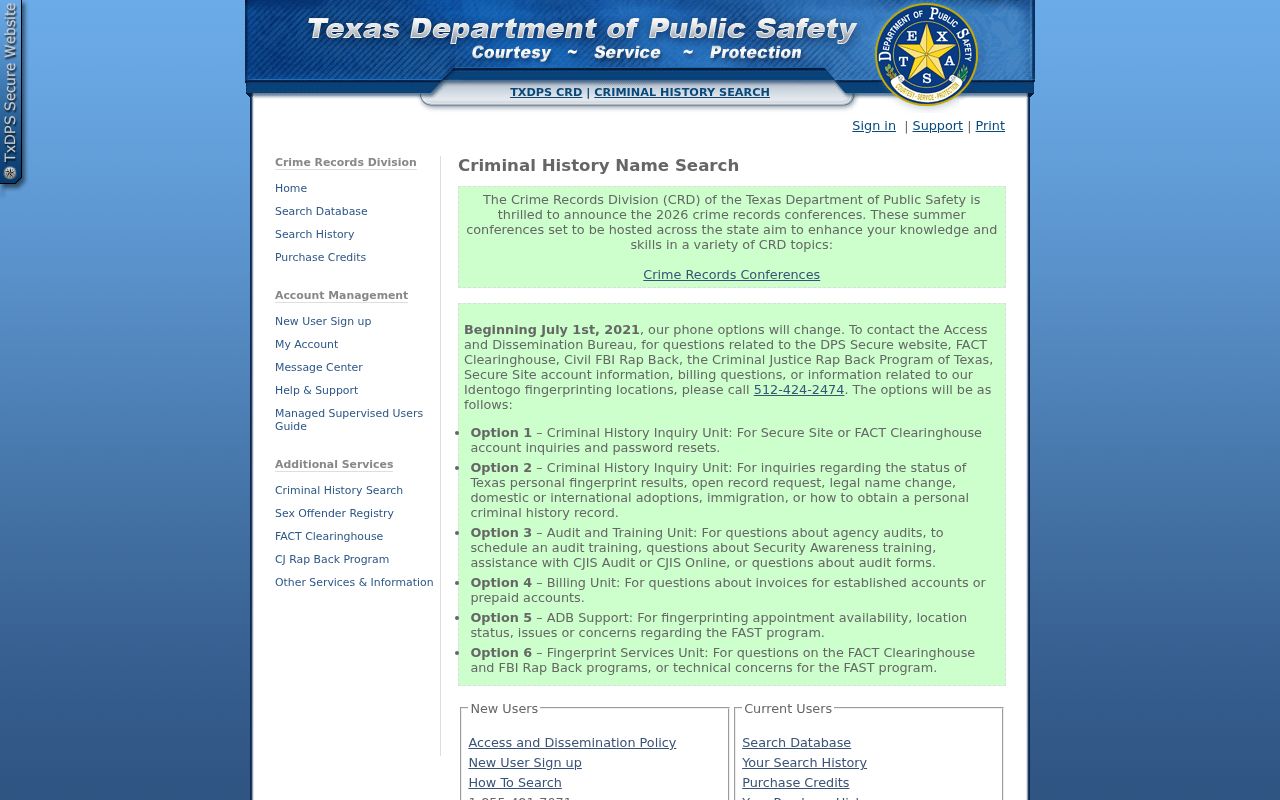
The portal searches reported public conviction and deferred-adjudication data, not every Hood County police contact, jail stay, dismissal, or pending case. Use a full name and date of birth where available, then compare a possible result with the Hood County clerk file.
DPS also publishes name-search instructions and credit rules. That source explains the limits of name matching and the user’s duty to decide whether the returned identity is correct.
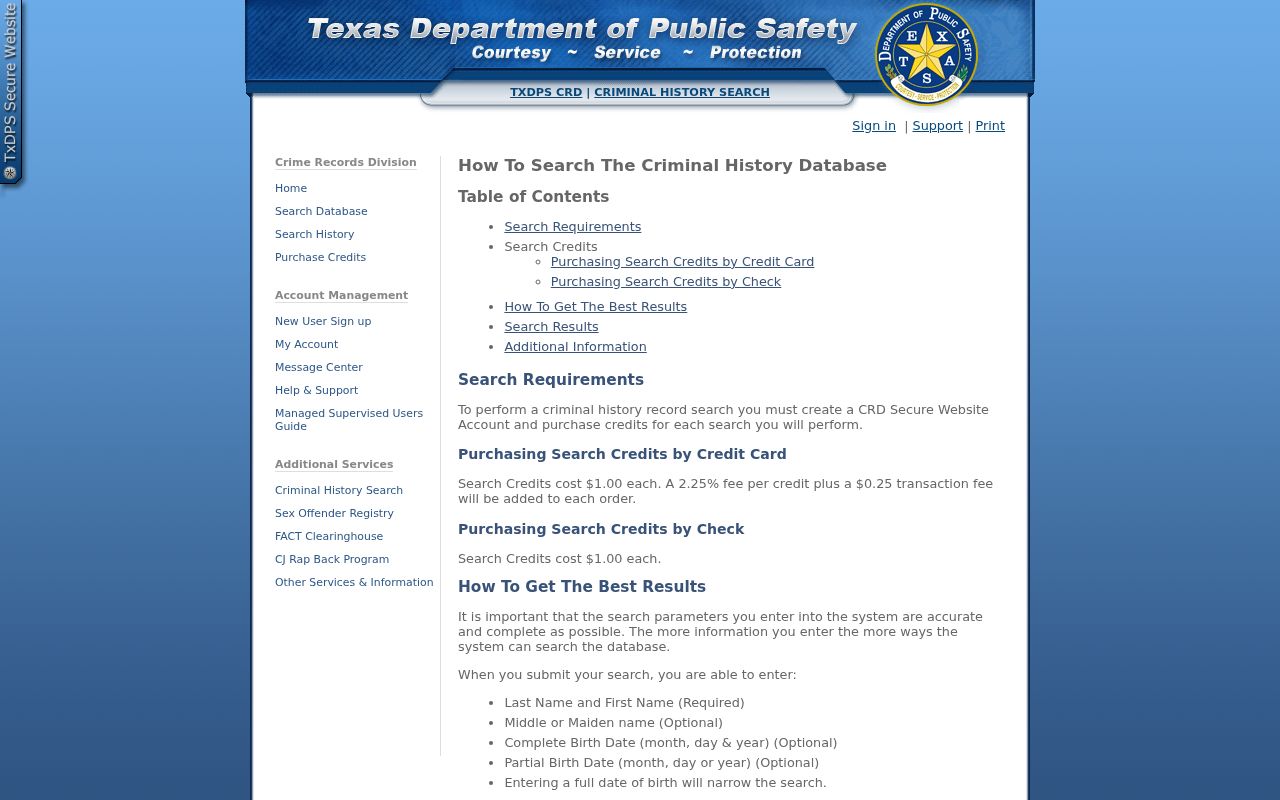
The current price is one $1 credit per search. Credit-card purchases add 2.25 percent per credit and a 25-cent transaction charge, so readers should prepare search details before spending a credit.
| Search field | Use in a Hood County match |
|---|---|
| Last and first name | Use the full legal name and spelling variants. |
| Middle name | Helps separate common names. |
| Date of birth | Strengthens identity comparison but is not fingerprint proof. |
| Sex and race | Optional identity criteria supported by the portal. |
Criminal Record Types
A Hood County arrest can create several files in sequence. The arresting officer writes an incident or arrest report. Hood County Jail creates booking and release data. A magistrate records warnings, probable cause, counsel, and bail. The prosecutor may reject, reduce, enhance, or rename the intake charge. Only after filing does the correct clerk open the court cause. DPS later joins reported arrest and disposition events to a fingerprint-linked statewide cycle.
- Police or sheriff report: the event narrative, location, alleged offense, officer action, and evidence references.
- Booking record: intake time, arresting agency, preliminary charges, bond, custody, and release details.
- Court file: the filed charge, docket, plea, orders, judgment, disposition, sentence, and costs.
- Warrant record: process from the issuing court and enforcing agency, subject to sealing and service limits.
- State history: fingerprint-linked cycles and reported outcomes maintained by Texas DPS.
- Supervision or registry record: separate information held by CSCD, TDCJ, local registration authorities, or DPS.
Granbury Police offers a city-only local records check. It expressly excludes county, state, and national inquiries. DeCordova law-enforcement events safely route first to Hood County Sheriff unless the city identifies a different creator. A Cresson record requires care because the city spans Hood, Johnson, and Parker Counties.
Hood County Jail or State Prison
Hood County Jail is the local pretrial and short-sentence custody channel. No stable anonymous official Hood County roster was verified, so the safe fallback is the official sheriff or jail page, a direct call, the jail lobby, or a written booking-record request. A commercial roster should not fill the gap. VINELink may add custody notices where Hood participates, but the originating office remains the place to confirm the record.
After a state prison sentence and transfer, custody moves into the Texas Department of Criminal Justice system. Parole decisions belong to the Texas Board of Pardons and Paroles, while the TDCJ Parole Division supervises people released on parole. These records answer different questions from a Hood County jail entry.
The Board of Pardons and Paroles explains the state decision layer for Hood County sentences that reach TDCJ.
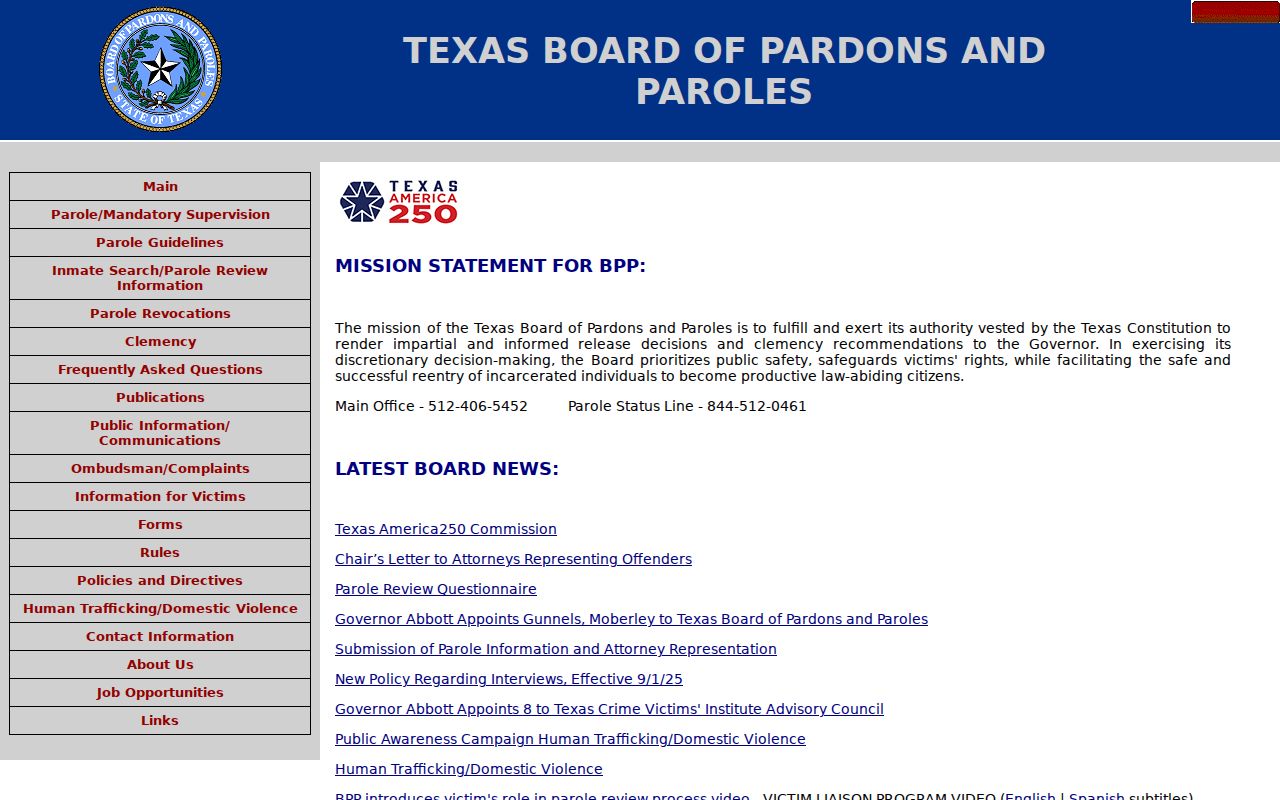
This source helps distinguish a parole decision from the Hood County judgment and from daily supervision notes, which are not a public online roster.
Note: A person can leave Hood County Jail before a clerk portal or statewide criminal history reflects the next stage.
Inside a Hood County Criminal Record
Each Hood County system organizes the same event from a different point of view. A jail record centers on custody. A court file centers on a cause and its counts. A DPS history centers on a person and fingerprint-linked event cycles. Matching them requires dates, agency names, numbers, and charge-level outcomes rather than a shared page layout.
| Name & Identifiers | Displayed name, aliases, limited birth data, and agency or state identifiers. |
|---|---|
| Arrest / Booking Data | Arrest and intake dates, agency, booking number, initial charges, bond, and release status. |
| Charges & Statutes | Charge text, level, statute citation, count, offense date, and charge status. |
| Disposition | Conviction, dismissal, acquittal, deferred adjudication, or another recorded charge outcome. |
| Sentence | Confinement, fine, costs, restitution, or community supervision ordered by the court. |
| Custody / Supervision | Local release, TDCJ custody, projected dates, or public docket entries about supervision. |
Public views should suppress Social Security numbers, full financial data, protected victim and minor details, and sealed material. A date of birth may also be limited. If a Hood County portal summary conflicts with a formal need, obtain the underlying judgment or certified disposition from the clerk.
Hood County Record Terms Explained
Short docket labels can change the meaning of a Hood County search. An arrest label is not a filed charge, and a filed count may end differently from the rest of the case. Read each count and date before deciding what happened.
- Capias
- A court order directing an arrest, often after a missed setting or another procedural event.
- Indictment
- A grand jury’s true bill charging an indictable offense in the 355th District Court.
- Deferred adjudication
- Community supervision without an immediate judgment of guilt, which can still be publicly reportable unless nondisclosed.
- Disposition
- The outcome of a specific charge or case, such as conviction, dismissal, or acquittal.
- No-bill
- A grand jury decision not to indict on the matter presented.
Fine-only does not mean record-free. A Granbury Municipal Court citation can create a docket, fine, bond, or court warrant even though it never enters the Hood County felony portal. Likewise, “dismissed” does not mean “expunged.” The arrest, jail, and DPS systems may still require a court order before qualifying data is removed or restricted.
Public Access Laws in Texas
Texas uses different access rules for executive-agency records, judicial files, statewide criminal history, and registry data. Direct a Hood County police or sheriff request to the agency under its designated Texas Public Information Act method. Ask a clerk for judicial records under court rules. DPS releases only the criminal-history information that state law makes public through the public product.
Key Texas laws:
Government Code Chapter 552 grants access to government information unless an exception applies and requires prompt handling through designated methods.
Government Code Chapter 411 controls criminal-history dissemination and permits public access to reported convictions and deferred adjudications.
Texas court access and redaction rules govern clerk-held judicial files, sealing, and protected identifiers.
Code of Criminal Procedure Chapter 55A sets the current expunction paths for qualifying Texas records.
Code of Criminal Procedure Chapter 62 controls registration, public registry fields, and duration.
Section 552.221 says production must be prompt under the circumstances. The often-cited ten-business-day period is generally the deadline for an agency to seek an Attorney General decision when it wants to withhold material, not a promised delivery date. Active investigations, juvenile matters, victim details, private identifiers, and sealed Hood County records may be withheld or redacted.
Hood County Records Before Odyssey
Modern portal coverage is not the full Hood County record horizon. The Texas State Library’s Hood County microfilm inventory lists county court minutes from 1876 through 1912. Volumes E, G, and I contain criminal minutes only. That makes the archive useful for genealogy, local history, and proceedings too old for a practical name search.
The 1890 Hood County Courthouse on Granbury’s square gives that history a clear setting, but modern record work often routes to county offices at 1200 West Pearl Street. Do not assume every current clerk counter or file remains inside the historic building. For an older search, give the clerk a full name, an approximate year, the likely court, and the offense. Ask whether an index, paper book, or microfilm search is needed.
Note: A portal’s earliest online date marks its digital coverage, not the first year Hood County created criminal court records.
Sealed, Expunged, and Restricted Records
Texas expunction under Chapter 55A aims at destruction or removal of qualifying records. An order of nondisclosure leaves records in place but limits public release while preserving access for criminal-justice and other agencies named by law. Chapter 55A replaced the former expunction chapter on January 1, 2025, so a current Hood County filing should use the recodified law and the form accepted by the correct clerk.
Eligibility can turn on the arrest date, charge status, limitation period, companion charges, court outcome, community supervision, and offense exclusions. An acquittal, pardon, no-bill, or eligible dismissal may create a path, but the word “dismissed” alone does not settle the issue. Felony petitions generally route through the District Clerk, while a County Court at Law misdemeanor routes through the County Clerk. No authoritative Hood County packet or current filing fee was located.
- Obtain a fingerprint-based self-review and certified dispositions for every charge from the arrest.
- Identify the Hood County court and confirm venue under Chapter 55A.
- List the arresting agency, jail, prosecutor, clerk, DPS, and any other record holder.
- File the accepted petition, follow notice rules, and attend the setting if required.
- After an order, verify each Hood County portal and DPS rather than assuming instant removal.
Hood County Supervision and Parole
Probation in Hood County is called community supervision and is managed locally through the 355th Judicial District Community Supervision and Corrections Department. The public court judgment and later docket entries are the best route to learn whether it was ordered. Daily officer notes, treatment details, and private supervision data are not an open name roster.
Parole is different. The Texas Board of Pardons and Paroles decides discretionary release, and the TDCJ Parole Division supervises releasees. The TDCJ Parole Division source shows the state supervision structure that can follow a Hood County prison sentence.
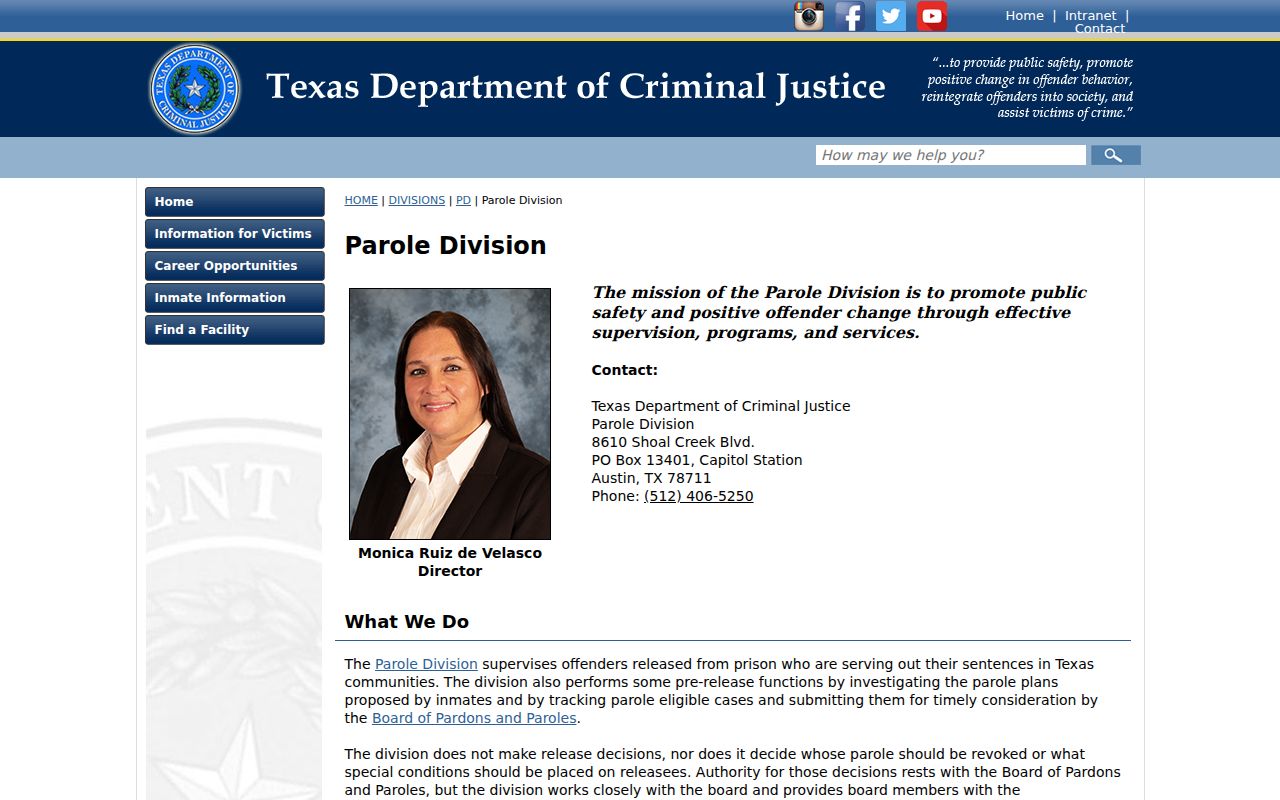
The image represents the state channel, not a Hood County probation roster. Verify the judgment first, then use the TDCJ locator and the correct state office for public custody or parole data.
When a technical violation or new allegation occurs, the Hood County docket may show a motion to revoke or adjudicate and a capias. The judge may continue, modify, or revoke community supervision after the required process. Parole violations follow separate state procedures.
Hood County Criminal Records by City
City location changes the first stop for a Hood County record. Granbury Police keeps its city-created reports and local checks, while Hood County dispatch may hold the related CAD or call material. No separate DeCordova police or court portal was verified, so the city secretary and Hood County Sheriff form the safe routing chain. Cresson has its own city channels, but its three-county footprint means the exact incident site and issuing court must be confirmed.
Granbury Criminal Records
Population 10,958 in 2020. City police reports and municipal cases use separate Granbury offices.
DeCordova Criminal Records
Population 3,169 in 2020. Confirm the record creator through the city secretary or Hood County Sheriff.
Cresson Criminal Records
Population 1,741 citywide in 2020. Match the event to Hood, Johnson, or Parker County.
These counts rank the three incorporated cities selected for Hood County profiles. Granbury’s newer 2025 estimate is 13,263, but growth is context for record demand, not evidence of a crime trend. Tolar and Lipan are incorporated but rank below the three cities shown.
Federal Records Beyond Hood County
Federal prosecutions from Hood County belong to the U.S. District Court for the Northern District of Texas and do not appear merely because a person searched county portals. PACER is the official federal docket and document service. It requires an account and ordinarily charges ten cents per page, with a $3 document cap and a quarterly waiver when charges total $30 or less.
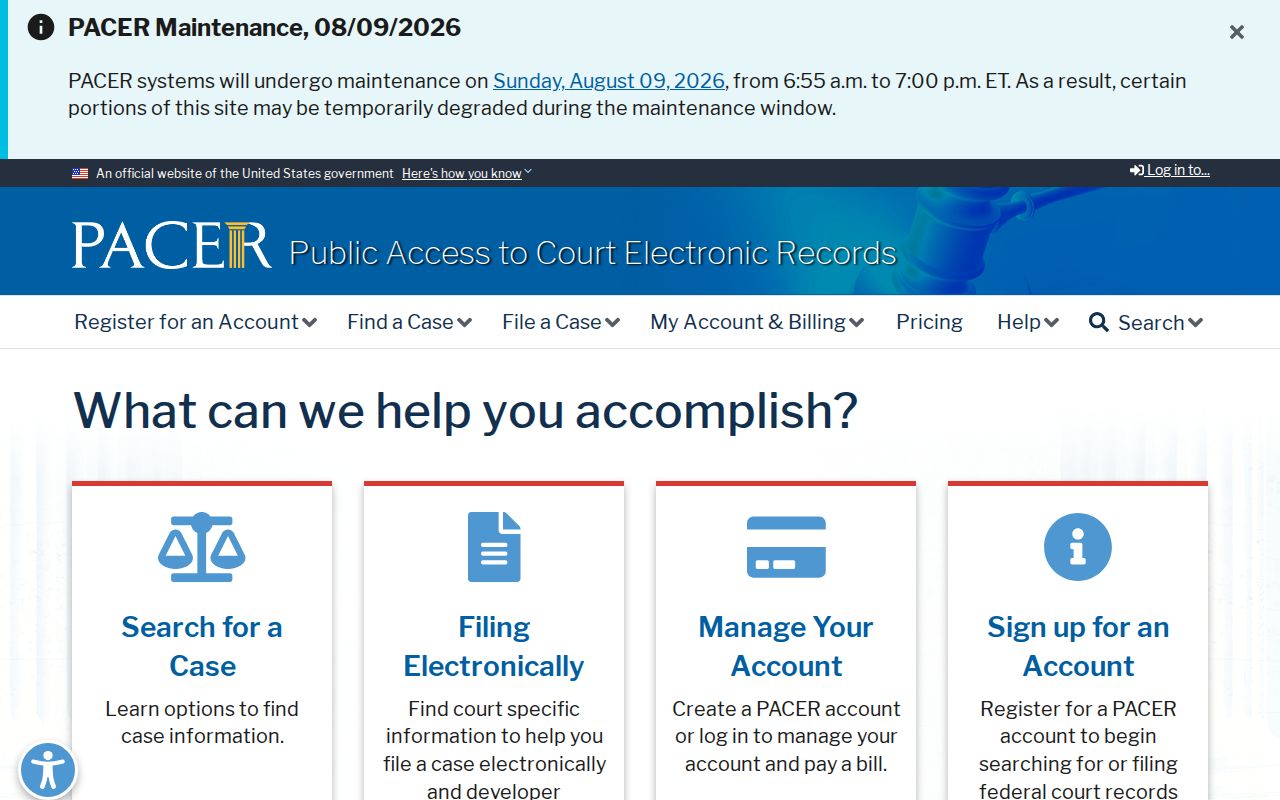
PACER can show public federal charging documents, docket entries, and judgments. Sealed cases and documents remain unavailable, and a PACER record does not replace the Hood County criminal court file for a state prosecution.
The Federal Bureau of Prisons inmate locator searches federal custody by name or federal identifying number.
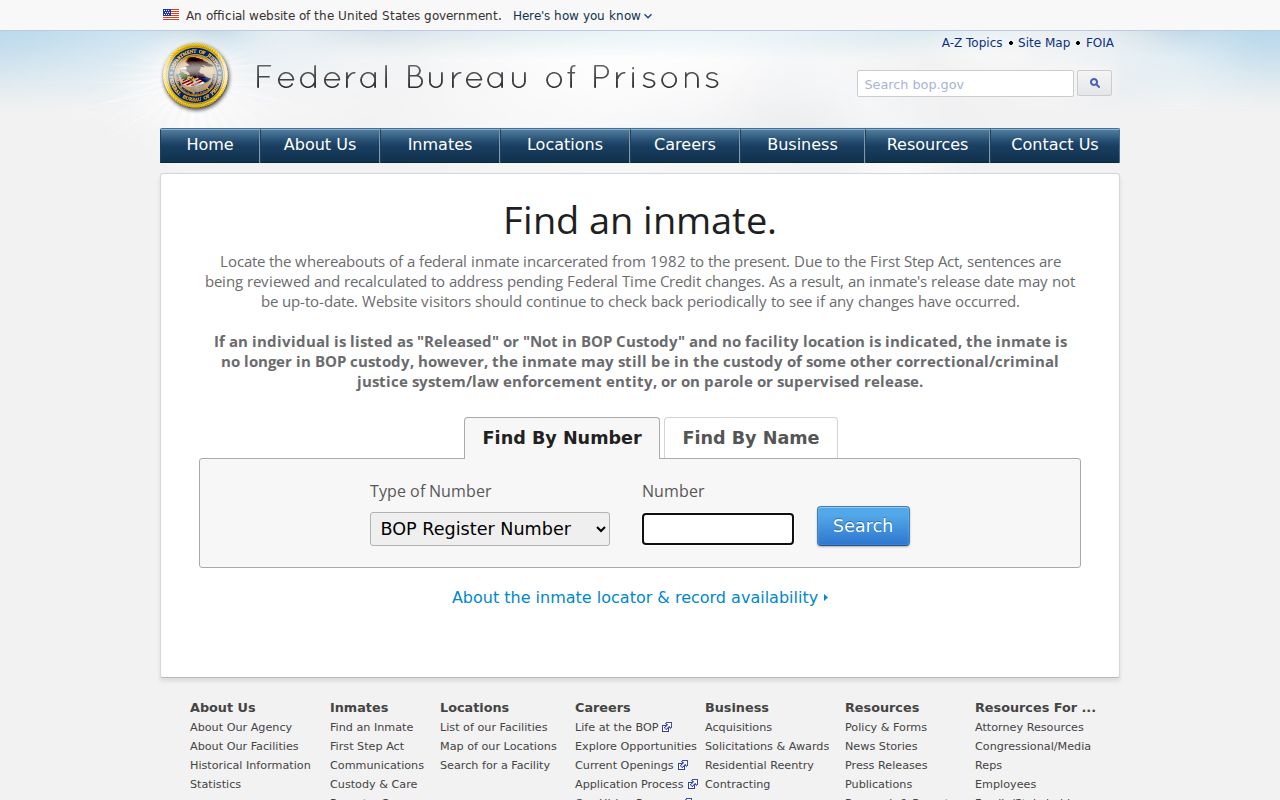
The BOP result belongs to a different custody system from Hood County Jail and TDCJ. No federal prison facility in Hood County was confirmed.
For a fingerprint-based Texas self-review, the official FAST and IdentoGO appointment channel accepts enrollment before prints are sent to DPS.
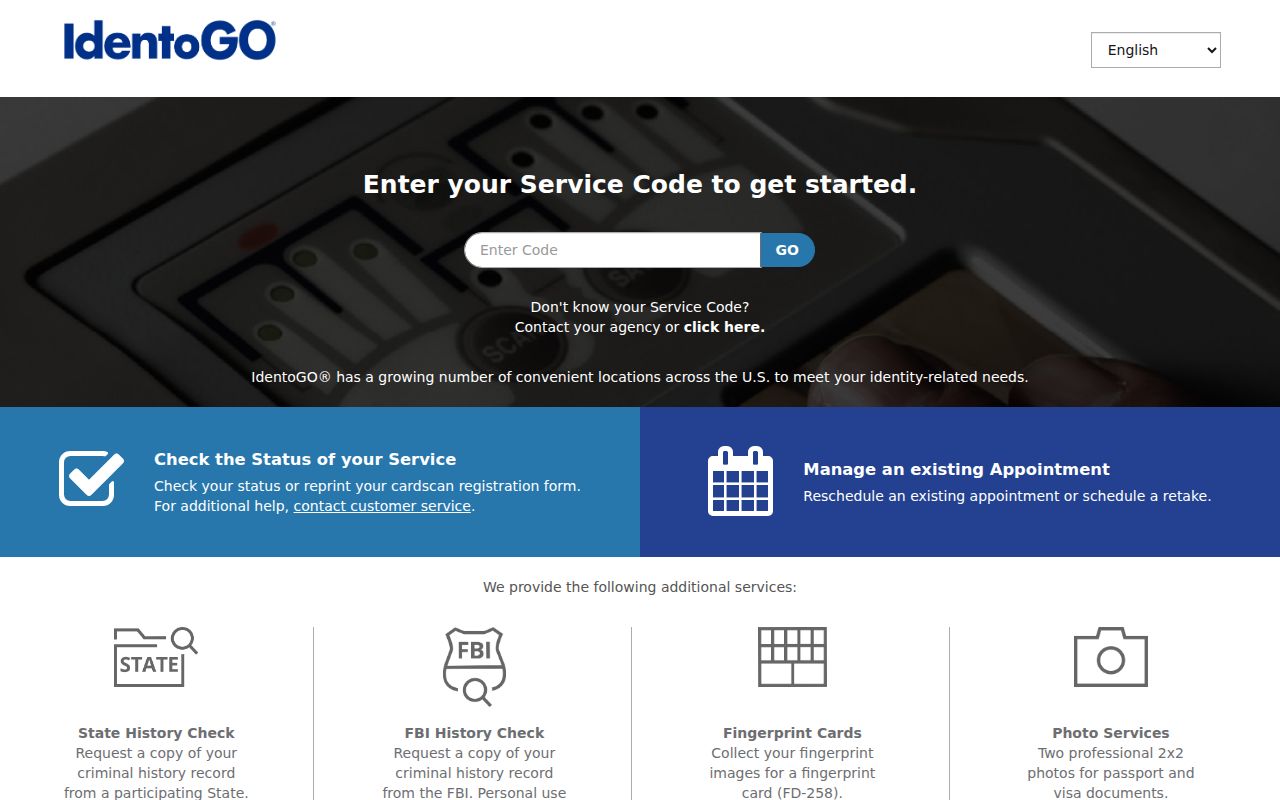
This identity-based channel is the strongest way to find a mistaken match or missing disposition in one’s own Texas history. Bring the enrollment confirmation and accepted identification, then compare the DPS response with certified Hood County dispositions.